



























At BNA Assurances, whose policies, receipts and claims run in an AS400, changing a motor tariff used to mean a request to IT and several weeks of development on the core.
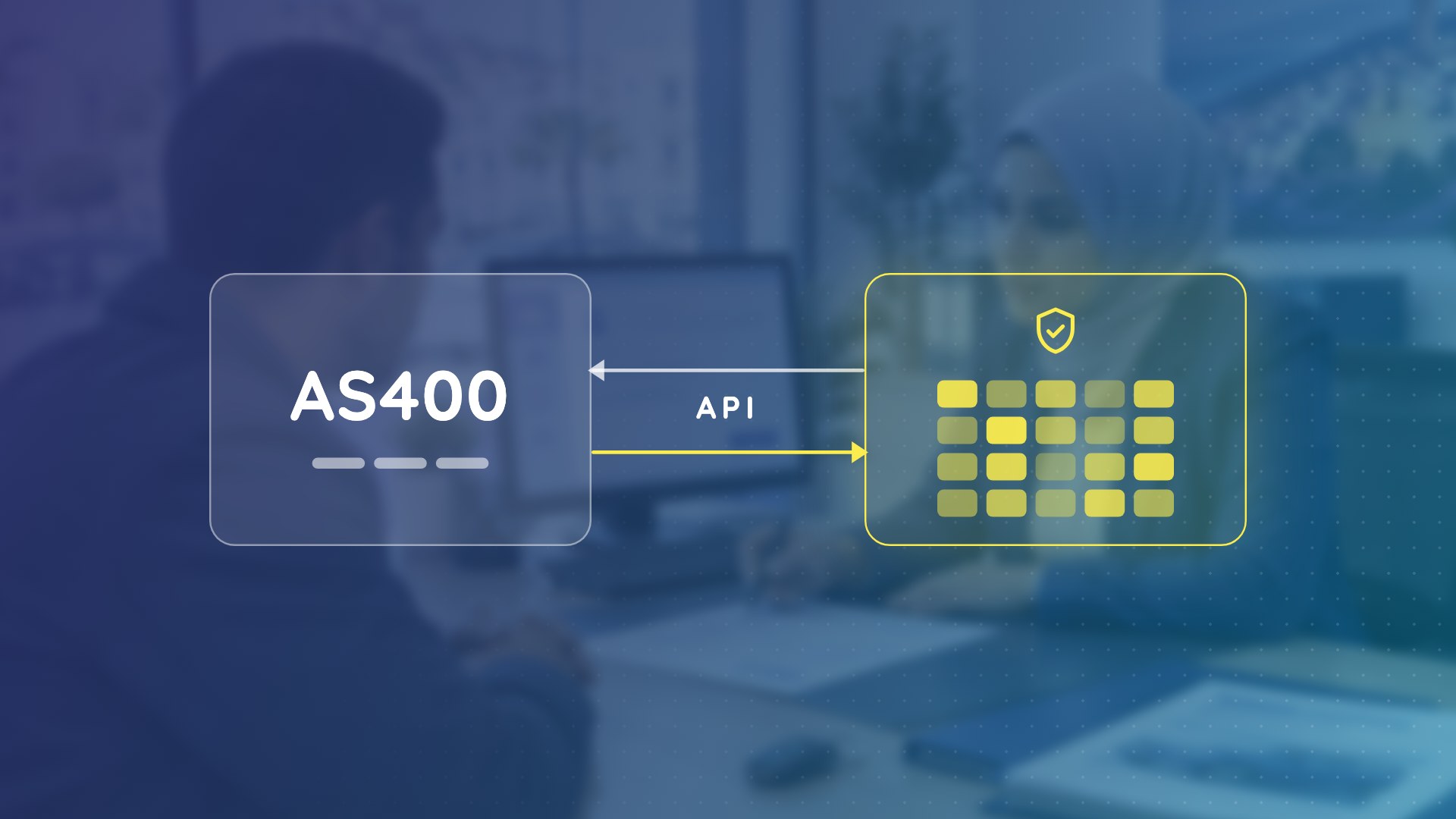
Our answer, from the platform we built for BNA Assurances: keep the AS400 as the book of record, and move pricing and the sales journey (quote, subscription, issuance) into a new layer that reads the core in real time and sends it every contract through an API. At BNA, that layer prices 46 products, 37 of them motor, on 145 rating factors, and the pricing team now changes a tariff in a few days instead of several weeks. Motor went live about 20 months after the first line of code; home, travel and school insurance followed. The steps below run in order, with one exception: the work on writing contracts into the AS400 starts on day one, because it is the longest.
Decide first who is master of what
Before any code, write down which system owns each piece of data, because every later dispute (a premium that differs, a receipt that is missing) comes back to that map. This is the one we run at BNA Assurances:
| Data | Master | How the other system gets it |
|---|---|---|
| Product catalogue, guarantees, tariff grids | New layer | Not needed by the AS400: it receives the computed premium |
| Quotes | New layer | Never sent to the AS400 |
| Contract, receipt, commissions | AS400, as book of record | Issued in the new layer, then pushed to the AS400 by API |
| Attestation stock | AS400 | Copied to the new layer by an API call twice a day |
| Claims and claims history | AS400 | Read in real time during subscription |
| Customer | Both | Created in the new layer, pushed to the AS400, looked up there |
Step 1: take the tariffs out of the AS400 and give them to the pricing team
At BNA, the motor tariffs lived in the AS400 itself, in its tables and programs. We extracted them with BNA's IT team and rebuilt them as grids in a pricing engine outside the core: each row maps a combination of rating factors to a base premium, a rate or a formula. The 145 rating factors cover the vehicle, the driver's bonus-malus and claims, the region, the travel zone and duration, or the insured values of a home. Around the grids, each product is described as data: its packs, guarantees, taxes, fees and rebates.
Before go-live, BNA's teams validated the premiums case by case: they re-priced typical contracts in the new engine and compared each result with the premium the AS400 produced. Each difference was traced back to the grid or the rule behind it and settled before the product opened.
The result is the measure of this step. BNA's pricing team changes its grids itself, in a back office and without a developer, and a tariff change now takes a few days of entry and testing instead of several weeks of development on the AS400. A few exceptions remain in code, such as caps and minimum amounts on specific guarantees; each one needs a development and a deployment when it changes, so keep them rare.
Two things we would build from day one on any new project: a four-eyes rule, where one actuary enters a grid change and a second one approves it, and an effective date on every change, so that a tariff can be prepared in advance and an old premium can always be explained. We would also turn the acceptance cases into a permanent reference set, each case with its expected premium, replayed automatically at every grid change.
Step 2: read the AS400 in real time
A premium without the customer's history is only an estimate, so the engine is connected next to what the core knows. During subscription, the new layer queries the AS400 in real time for the customer's history and the risk checks underwriting depends on. It goes through web services that BNA's IT team exposes on the AS400, never through direct database access or file transfers: the AS400 team keeps control of its data, and the platform only depends on the service contracts agreed with it.
Step 3: a subscription workflow with traced derogations
With pricing and checks in place, a subscription runs as a workflow, and a case that falls outside the rules goes through an authorization step. At BNA, a derogation goes to head office through a traced validation circuit and the answer comes back to the seller in real time. Agents and the bank's branch network sell with the same tool, so they apply the same tariffs, checks and derogation rules.
Step 4: write contracts into the AS400, where projects slip
Pushing each issued contract into the AS400 is the step that takes the longest, which is why its design starts with the AS400 team on day one. The customer leaves the agency with documents produced by the new layer; the contract, its receipt and its guarantees then travel to the AS400 by API, asynchronously. Four problems came up at BNA, and each one now has its rule:
- Half-saved contracts. A push can fail after the AS400 has saved part of it, and replaying it then fails on a duplicate. Rule: before any replay, ask the AS400 whether the contract already exists.
- Documents generated twice. An automatic retry after a timeout produced a contract's documents twice. Rule: no automatic retry on a call that cannot safely run twice.
- AS400 unavailable. When the core does not answer, an attestation check must say "verification impossible", never "attestation already used", or agents turn customers away for nothing.
- Data mapping. Fields, person types and addresses (truncated, duplicated) that the AS400 expects in its own format are corrected over years, not weeks. Budget for it after go-live.
Every push is logged with what was sent, what came back and how many attempts it took; failures raise an alert and are replayed. On any given day, the insurer can list the contracts that are not yet in the AS400.
Step 5: go live on motor, then add products one by one
Go live on the product that carries the volume, then extend: each new product reuses the engine, the workflow and the AS400 connection. At BNA, the first code was written in February 2021 and motor went live at the end of 2022. Home insurance took longer, in 2023 and 2024, because its pricing needed new rating logic in the engine (insured values of the building and contents), not only new grids. Travel and school insurance followed in 2025, on the same platform.
The checklist for an insurer starting tomorrow
- Write the master map: tariff, quote, contract, receipt, attestation, customer, claims.
- Agree with the AS400 team, on day one, which web services it will expose, for reads and for writes.
- Extract the current tariffs from the core and rebuild them as grids the pricing team can edit.
- Build a reference set of priced contracts with the premium the AS400 gives today, and replay it before go-live and at every grid change.
- Require a second validation and an effective date for every grid change.
- Make every push to the AS400 logged, replayable without duplicates and alerted on failure.
- Go live on motor first, and budget the AS400 mapping corrections after go-live.
The full scope of what we build for insurers is on our page on non-life insurance software, and the project itself in the BNA Assurances case study.